
How St. Louis Summer Heat Impacts Your Collision Repairs
St. Louis in August is tough on vehicles. The heat is high, the humidity feels heavy, storms pop up fast, and the sun seems to sit right on the hood. All of that can affect how auto body repairs are done and how long they last. When your car has just been fixed, the weather outside suddenly matters a lot more.
Auto body repair is not just hammering out dents and spraying paint. It is a careful process that depends on temperature, moisture, and light. If those things are not controlled, paint, fillers, and sealants may not cure the way they should, and problems can show up months later. By understanding how summer conditions in St. Louis affect your repair, you can choose the right shop, the right timing, and the right aftercare so your vehicle looks good longer and holds its value.
What Extreme Heat Does to Fresh Paint and Clear Coat
Fresh paint loves consistency. St. Louis summer weather is anything but consistent. High temperatures and thick humidity can change how automotive paint and clear coat cure. If products go on too hot, too wet, or cure too fast, you can run into issues like:
- Solvent popping, tiny pinholes from trapped solvents
- Hazing or cloudiness in the clear coat
- Soft finishes that scratch more easily
- Uneven gloss or texture across panels
Parking a freshly painted car in full sun during peak heat can also cause trouble. The surface can get very hot, especially on darker colors. That heat can:
- Make the clear coat more prone to swirl marks when washing
- Leave water spots that are hard to remove
- Create imprints from thick covers or objects resting on the paint
- Speed up fading if the paint is not fully cured
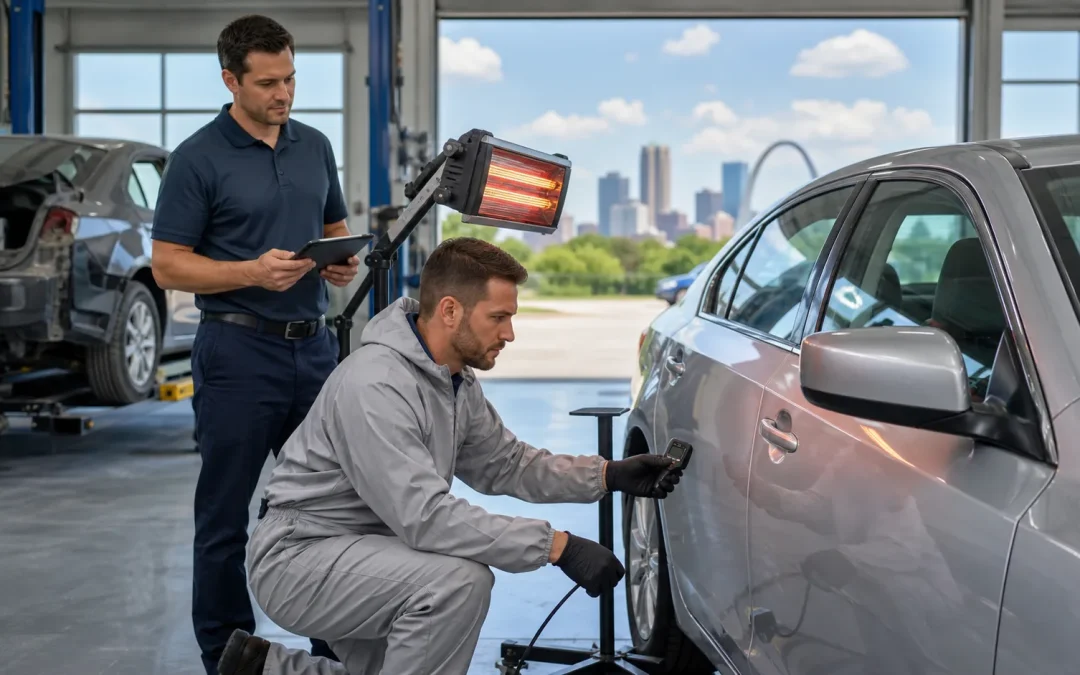
A professional auto body repair in St. Louis should account for all of this. That means using a controlled spray booth, proper bake cycles, and enough cool-down and cure time before the car goes back outside. It also means giving clear post-repair care instructions for hot-weather conditions, like how long to wait before waxing and how to wash gently while the finish is still curing.
How Humidity and Storms Affect Bodywork and Rust Prevention
Heat is only half the story. St. Louis humidity and sudden storms can be just as hard on bodywork. When the air is loaded with moisture, metal prep and filler work must be done with extra care. If moisture sneaks into the process, it can get trapped under paint and primers.
If a shop does not control moisture during sanding and refinishing, you may see:
- Poor adhesion of primers and paints
- Bubbling or blistering over time
- Filler shrinking or cracking
- Edges lifting around repaired areas
Collision damage often exposes bare metal, welds, and seams. Those areas are already more vulnerable. If panels, frames, and welds are not dried, sealed, and undercoated correctly, rust can start earlier and spread faster, especially when humidity is high and storms keep everything wet.
Long-term, that can affect:
- The strength of structural areas
- The look of the paint finish
- The life of rocker panels, wheel arches, and underbody parts
Choosing a collision center that understands our local humidity is key. Look for a shop that uses proper rust inhibitors, quality primers, and OEM-style seam sealers. Moisture-control steps, like working in a dry, enclosed space and allowing full cure times, help protect your vehicle from future corrosion that could show up long after the accident is forgotten.
Frame, Plastics, and Glass: Heat Stress Beyond the Paint
Summer heat in St. Louis does not just affect the shiny part of your car. It also puts stress on the structure and other materials.
Metal frames and structural parts expand in heat and contract when they cool. When a frame has been straightened or a structural piece has been repaired, poor alignment or weak spots may show up more as temperatures swing. Over time, that can lead to:
- Uneven tire wear from subtle misalignment
- Noises or creaks when the body flexes
- Gaps that shift at doors or panels
Plastics also react to heat. Bumpers, trim pieces, and headlight housings can warp, crack, or haze if they are not properly prepped, painted, and cured. On a very hot day, a dark plastic bumper can become soft enough that:
- A tight parking bump leaves a deeper mark
- A low-quality repair starts to ripple or wave
- Cheap or incorrect paints peel or fade quickly
Glass and windshields have their own set of needs in summer heat. Glass adhesives depend on temperature and cure times. If a windshield is installed and then exposed to boiling cabin temps too soon, or the vehicle is driven on rough roads right away, the bond can be stressed before it has fully set. It is also best to avoid slamming doors on a fresh windshield repair, since the pressure can push on the uncured adhesive, especially when hot air inside the car is already expanding.
Smart Timing and Care for Auto Body Repair in St. Louis
You cannot control the weather, but you can plan around it. When scheduling auto body repair in St. Louis during summer, it helps to:
- Build in enough time for proper curing, not rush jobs
- Avoid picking up the car during the hottest part of the day, if possible
- Let the shop know about any long trips soon after the repair
After you get your vehicle back, the first 30 to 60 days in hot weather are important. Fresh finishes are still hardening and can be more sensitive. Good aftercare usually includes:
- Hand washing with clean mitts and soft towels, no automatic brushes
- Avoiding wax and strong sealants until the paint has cured as directed
- Rinsing off bird droppings, bug splatter, and tree sap quickly
- Parking in shade or covered areas when you can
- Using sunshades inside to reduce interior heat load
Be careful with covers. A breathable, soft cover can be helpful, but on very hot days, a thick cover can trap heat and leave marks if the paint is brand new.
For commercial fleets that run all day in the sun, the challenges stack up fast. Constant exposure, frequent washing, and tight downtime schedules can be hard on decals, branding, and fresh paint. Planning repairs in stages, using consistent materials and colors, and building simple care rules for drivers can keep the fleet looking sharp even in peak summer heat.
Protect Your Investment with Heat-Smart Collision Repair
St. Louis summer heat does not have to shorten the life of your repair. When a collision shop understands local weather, controls temperature and moisture indoors, and follows proper curing and rust-prevention steps, your vehicle can hold up well even through the hottest months. The key is matching materials and processes to the conditions your car actually lives in.
At Central Auto Body, we work every day in this climate, handling frame straightening, auto body repair, paint work, and hail damage repair for personal vehicles and commercial fleets. We use controlled environments for painting and refinishing, and we provide insurance-friendly estimates so the process is as smooth as possible. If you have questions about how recent repairs will hold up in the St. Louis heat, or you want guidance on summer-specific care for your vehicle, we are always ready to help you protect your investment.
Restore Your Vehicle’s Safety and Appearance With Expert Care
If your car has been damaged, we are ready to help you get back on the road with safe, precise repairs. Learn more about our auto body repair in St. Louis to see how Central Auto Body restores both structural integrity and a flawless finish. Our team will walk you through the repair process, explain your options, and coordinate with your insurance when needed. Have questions or ready to schedule an appointment? Just contact us and we will take it from there.
Recent Comments