
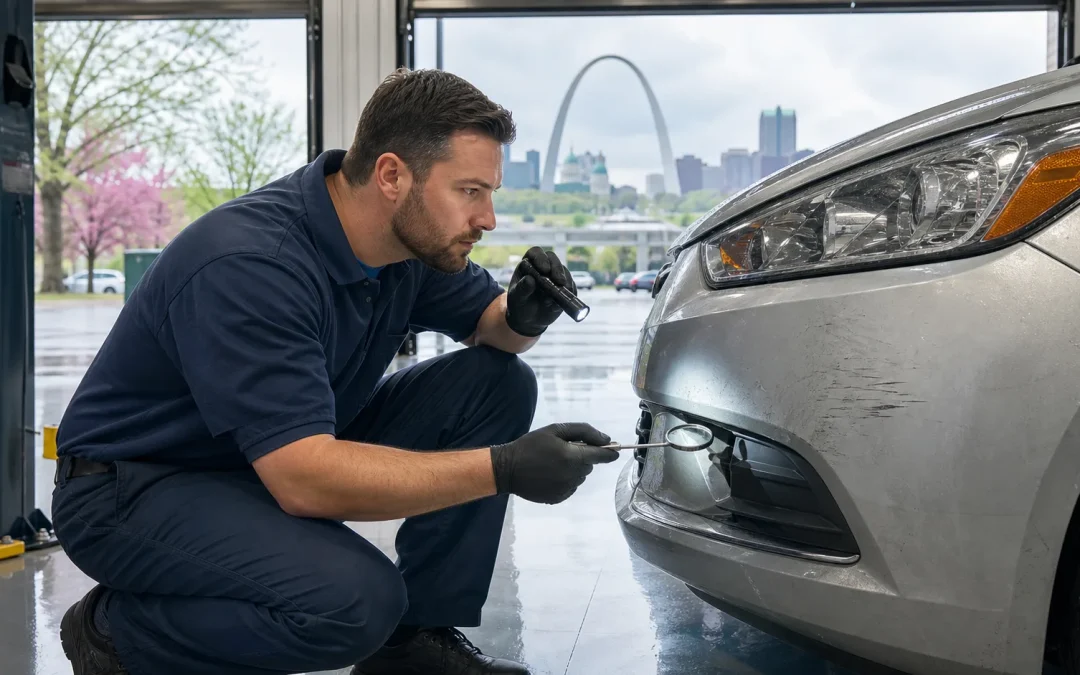
Spring Storm Fender Benders and Why Hidden Damage Matters
Spring storms around St. Louis can turn a normal drive into a slippery mess in just a few minutes. Heavy rain, slick streets, standing water, and fresh potholes all show up at once. That is when small fender benders, curb strikes, and hydroplaning incidents happen, even to careful drivers.
Even if the damage looks minor, a spring storm mishap can bend more than a bumper. Hits to wheels, suspension, and undercarriage parts can create problems you will not see right away. In this guide, we will walk through what can get damaged beyond the visible scrapes, what warning signs to watch for, and why professional collision repair in St. Louis keeps those small problems from turning into serious safety issues later.
How Spring Storms Create Hidden Vehicle Damage
When heavy rain hits warm pavement, water builds quickly and sits on top of the road. Your tires have to push that water out of the way. If they cannot, the tires start to ride on the water instead of the asphalt. That is hydroplaning, and it can happen fast.
Hydroplaning incidents often end with a sudden impact, such as:
- Sliding into a curb or median
- Tapping or striking another car at low speed
- Spinning into a ditch or soft shoulder
- Hitting standing water that hides potholes or debris
Even if the bumper only has a small scuff, the force of that hit can twist alignment, crack suspension mounts, or stress the frame. Many drivers think, “It was just a little slide, I am fine,” but the real damage may be underneath.
Spring storms also deepen and hide potholes. Freeze and thaw cycles break up the asphalt, then rain washes pieces away and fills the holes with water so you cannot see how deep they are. A hard pothole hit can:
- Bend or crack a wheel
- Damage a tire sidewall
- Knock alignment out of spec
- Loosen or break plastic undercarriage shields
Parked cars are not always safe either. Hail can chip paint and dent panels. Flying branches or trash in strong winds can crack lights or grilles. Standing water in lots or driveways can splash into places it should not, including areas with sensors and wiring for modern safety systems.
Alignment and Suspension Red Flags After a Storm Hit
After any curb strike, pothole impact, or hydroplaning bump, alignment and suspension should always be a concern. These systems control how your car tracks down the road, how it steers, and how your tires wear.
Common signs that alignment might be off include:
- Steering wheel is no longer centered when driving straight
- Car pulls to one side, especially on flat roads
- Tires start to wear unevenly or faster than normal
- Vibration or shimmy in the wheel at highway speeds
Modern suspension parts are designed to bend or deform in a controlled way when they take a hit. That helps protect the people inside, but it also means pieces like control arms, struts, tie rods, and bushings can be damaged without any obvious clue on the outside.
Some problems that often need a trained eye and proper equipment to spot are:
- Slightly bent control arms that change wheel angles
- Struts or shocks that start leaking or lose damping after an impact
- Steering parts that are weakened and more likely to fail later
- Subtle frame or unibody shifts that affect how the car tracks
A professional alignment check after a storm mishap is not just about making the steering wheel straight. A careful collision repair process will measure the structure of the vehicle, confirm factory alignment specifications, and inspect the suspension for damage before putting everything back together. That is how you keep a “small” incident from turning into a bigger safety issue a few months down the road.
Wheels, Tires, and Undercarriage Shields You Should Not Ignore
Wheels and tires take the first hit when you slam into a hidden pothole or chunk of broken asphalt. The damage is not always easy to see in the rain or when you are in a hurry.
Things to have checked after a hard impact include:
- Sidewall bubbles or bulges in the tire
- Small cracks, chips, or bends in the rim
- Slow air leaks that show up a day or two later
- Vibration that starts only at certain speeds
Even if a tire still holds air, a damaged sidewall or bent rim can fail suddenly under load or heat. That can lead to blowouts, poor handling, and more uneven tire wear as time goes on.
Undercarriage shields and splash guards are another part many people forget about. These plastic covers sit under the engine, transmission, and other lower areas of the car. During spring storms, they help protect:
- Wiring and connectors for sensors and electronics
- Brake lines and fuel lines
- Lower engine and transmission components
- ABS and other control modules mounted low on the body
When a shield gets cracked, broken, or ripped loose by a pothole or debris, it can drag on the ground or hang down. That is not just annoying. A missing or damaged shield can let water, road salt, and rocks hit parts that were never meant to be exposed. Over time, this can lead to rust, electrical problems, and damaged safety wiring.
If you notice any plastic panels hanging, scraping, or missing after a storm drive, it is worth getting them inspected and repaired as soon as you can.
ADAS Cameras and Sensors After a Minor Collision
Many newer vehicles use ADAS, short for Advanced Driver Assistance Systems. These are the features that help you stay in your lane, watch your blind spots, and avoid or reduce collisions. Common examples are:
- Lane departure warning and lane keeping assist
- Automatic emergency braking
- Blind spot monitoring
- Rear cross-traffic alert and parking sensors
- Adaptive cruise control
These systems depend on cameras, radar modules, and ultrasonic sensors mounted in bumpers, grilles, mirrors, and windshields. Even a light bump in a parking lot, a grille strike from road debris, or a misaligned bumper cover from a storm incident can move a sensor just enough to throw it out of calibration.
When that happens, you might notice:
- Warning lights or messages on the dash
- Lane or distance alerts that come on too early or too late
- Features that shut off and will not turn back on
- Systems that feel different from how they used to work
Modern collision repair in St. Louis needs to include electronic scanning and, when needed, ADAS recalibration based on the vehicle maker’s instructions. It is not enough to just repair the paint and panels. Sensors must be mounted correctly, then tested and reset so the safety features work as designed when you need them most.
When to Call a Pro After a Spring Storm Fender Bender
After a storm-related mishap, it can be tempting to shrug off light damage and keep driving. But a quick, professional inspection can save you from bigger problems later, especially before the next season brings new weather challenges.
Here are clear signs that it is time to have a collision specialist look at your vehicle:
- Steering pull, shaking, or new noises when turning
- Fresh dashboard warning lights, especially ABS or ADAS related
- New or uneven tire wear, or a tire that keeps losing air
- Moisture inside headlights or taillights after rain
- Plastic shields dragging, scraping, or missing under the car
- Gaps, misaligned body panels, or bumpers that do not sit right
At Central Auto Body, we help drivers across the St. Louis area with thorough post-collision checks after spring storms and wet weather mishaps. Our team can inspect your frame and alignment, look over suspension and wheels, repair hail and paint damage, and check that lights, shields, and safety systems are working correctly. By finding and fixing hidden damage early, we help keep your vehicle safe, straight, and ready for whatever the next round of storms brings.
Restore Your Vehicle’s Safety And Value With Expert Care
If your car has been in a collision, we are ready to inspect the damage and recommend the right repairs to keep you safe on the road. Schedule professional collision repair in St. Louis with Central Auto Body so our technicians can address structural issues the right way. Reach out today through our contact page to book an appointment or ask any questions about your repair options.
Recent Comments