Smart Decisions After a Minor Crash in Brentwood
A minor crash around Brentwood can happen fast. One second you are rolling through after-work traffic on Manchester, the next you hear that sickening bump from behind. Whether it happens near school pickup, by a crowded shopping center, or on a slick side street in fall weather, you have to make good choices right away.
Many drivers think that if the damage looks small, the car must be fine to drive. With modern vehicles, that is not always true. Advanced safety systems, hidden structural parts, and sensitive electronics can be damaged even in a low-speed tap. In this guide, we walk through a simple decision tree so you can quickly decide if it is safe to drive, when to tow, and what to document so your insurance claim and any ADAS work go smoother.
Quick Safety Check at the Scene Before You Move
First, protect people. Cars can be repaired, people cannot. Before you worry about paint or bent metal, slow down and check your surroundings.
If you are in a safe spot and the cars still roll, you can gently move to the shoulder or a nearby parking lot. Turn on your hazard lights and set out any warning triangles if you have them. Then check for injuries, even small ones, and call for medical help if anyone is hurt.
Next, do a fast roadworthiness check before you try to drive away. Look under the car for leaking fluids, puddles, or a strong fuel smell. Watch for steam or smoke from under the hood, and check that all four tires are still inflated and not torn or pushed sideways. Confirm the wheels point straight when the steering wheel is straight, make sure the hood and trunk latch and stay shut, and check that doors open and close normally without scraping or sticking.
If something feels off, trust your gut. There are some times when it is safer to stay put and call for help, such as nighttime crashes with low visibility, busy Brentwood intersections or highway ramps where traffic moves fast, any crash where you see airbag deployment, or situations where the body looks twisted or the frame might be bent. If you have any doubt at all about safety, it is better to wait in a safe place and call for a tow than to risk a short drive that causes more damage.
Can You Drive or Should You Tow in Brentwood MO
Once you know everyone is okay and the scene is safe, it is time to decide: drive or tow. Think of this as a simple filter.
It is usually OK to drive when:
- The damage is minor and cosmetic, like small dents, scuffs, or light scratches
- Headlights, brake lights, and turn signals all work
- Mirrors are in place and not cracked to the point you cannot see
- There are no new dashboard warning lights or beeps you have not seen before
- The vehicle tracks straight, the steering feels normal, and the brakes respond as usual
You should arrange a tow when you see any of these warning signs:
- Airbags have deployed or the airbag cover has burst open
- A wheel looks bent, pushed back, or tucked under the car
- The vehicle leans to one side or the suspension looks twisted
- Bumpers are hanging off or the body looks pushed in toward the tires
- The windshield or windows have large cracks, spiderwebs, or missing glass
- The hood or trunk will not latch or could fly open while driving
- Heavy or fast fluid leaks appear under the vehicle
In our area, many drivers think they can “just get it home” on I-64, I-44, or local streets and deal with it later. That short drive can turn a fixable situation into a much larger problem, especially if more parts bend or a loose bumper breaks free at speed. When in doubt, calling a trusted collision repair shop in Brentwood, MO or nearby Maplewood to help set up a tow can save time, stress, and extra damage.
What to Photograph and Document for Insurance and ADAS
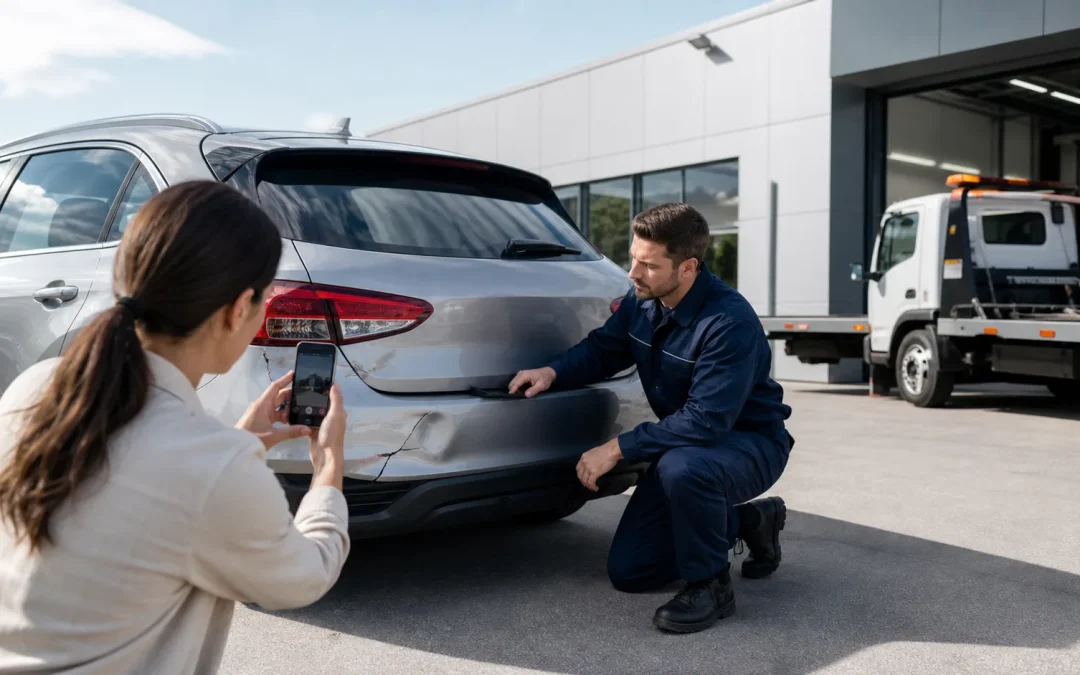
Once everyone is safe and you have decided whether to drive or tow, your next step is to document the crash. Good photos and notes can make a big difference with insurance and with getting modern safety systems back to normal.
Key photos to take include:
- Wide shots of all vehicles from different angles
- Close-ups of every damaged area, even tiny scrapes
- Any skid marks, debris, or broken parts on the road
- The intersection, traffic lights, and road signs nearby
- License plates of all vehicles involved
- Any visible sensors, cameras, or radar units on bumpers, grilles, mirrors, and windshields
Do not forget the basics. Get names, phone numbers, and insurance details of all drivers, plus contact info for any witnesses who stop. If officers come to the scene, record the police report number. It also helps to write down weather and road conditions, such as wet leaves, light rain, or early dusk, and to make a short written note or voice memo describing what you were doing and what happened.
For vehicles with ADAS, it also helps to record anything unusual the car did before or after the crash, since those details can support the need for proper checks and calibration later:
- Photos of any warning lights or messages on your dash
- A note if lane-keep assist, adaptive cruise, blind spot alerts, or parking sensors acted odd
- Any beeps, steering tugs, or auto-braking that surprised you
Sharing this information with your collision shop and insurance adjuster can support the need for ADAS checks and calibration once the body and frame repairs are done.
Working with a Local Collision Repair Shop in Brentwood MO
After the initial stress passes, the repair process begins. Choosing a nearby expert body shop can make the whole situation easier on you and your family or your business fleet.
A local shop can help with:
- Faster, in-person estimates so you know where you stand
- Easy drop-off and pickup, even if you have to leave the car for a while
- Clear communication while your vehicle is in the shop
- Familiarity with common St. Louis area insurance processes and paperwork
When you talk with a shop, it helps to go in with a few clear questions so you understand how they handle safety systems and hidden damage, and so you have good records after the work is complete:
- Do you perform or arrange ADAS calibrations after repairs?
- How do you check the frame and structure for hidden damage?
- How do you document repairs for my records and possible future resale?
As we get into fall and early winter, crashes from wet leaves, early frost, darker commutes, and even deer on the move can go from “no big deal” to “my sensors are all lit up now.” Having a collision repair plan in place and knowing which shop you trust in Brentwood or Maplewood means you are not scrambling on the side of the road with a damaged car and a spinning mind.
Turn a Minor Crash Into a Safer, Smarter Comeback
A minor crash does not have to turn into a long-term headache. The keys are simple: protect people first, do a quick safety check, make a smart drive-or-tow choice, and document everything clearly for insurance and for the repair team.
At Central Auto Body, we see how often “little” hits hide bigger problems, from frame issues to ADAS sensors that are just a bit off. A prompt, professional inspection can protect your safety, keep your vehicle’s value stronger, and help your car drive the way it was meant to. Saving our contact info in your phone, glove box, or fleet binder before you need it is one of the easiest ways to be ready for the next fender-bender on Brentwood roads.
Restore Your Vehicle’s Safety and Value With Expert Collision Repair
If your vehicle has been in an accident, Central Auto Body is ready to inspect the damage, explain your options, and get you back on the road safely. Schedule an appointment with our trusted collision repair shop in Brentwood, MO so we can assess your frame, body, and paint needs in detail. We work directly with you to coordinate repairs that fit your timeline and budget. Have questions or want to book a visit now? Just contact us and our team will follow up promptly.
Recent Comments