What Really Happens After You Drop Off Your Vehicle
When your vehicle is damaged, it is stressful. You are worried about safety, your schedule, and how long you will be without your car. Knowing what actually happens during auto body repair in St. Louis can take some of that pressure off.
Modern repair is not just pounding out dents and spraying paint. Today’s vehicles have advanced materials, electronics, sensors, and safety systems that all have to work together. That is why the repair process follows clear steps from the first look to the final quality check.
At our Maplewood Shop, we focus on clear communication and honest updates. From the day you drop your vehicle off, we want you to understand what stage it is in, what we are waiting on, and what comes next with your repair and your insurance company.
First Look: Check-in, Inspection, and Insurance Estimates
When you first arrive, we start with a detailed check-in. We will:
- Take photos of all sides of the vehicle
- Note visible damage and any pre-existing dings or scratches
- Collect your contact and insurance information
- Confirm your concerns and any deadlines, like trips or work needs
We listen to how the accident or hail damage happened, because that helps us know where to look for hidden issues. The initial inspection covers visible damage, signs of frame or structural movement, and key safety items like airbags, lights, and sensors.
Even with a careful first look, some problems stay hidden until we take parts off. Wiring, inner panels, crash sensors, and deeper frame sections are not always visible from the outside. That is why early estimates can change later.
Here is how estimates usually work in the St. Louis area:
- We write a detailed, line-by-line estimate using manufacturer repair procedures where needed
- We share that estimate with your insurance company
- If hidden damage appears later, we send a “supplement” with photos and notes
Summer can be busy around here. Hailstorms, heavy traffic, and vacation travel all bring more collisions and dents. Booking your estimate and repair time as early as you can makes it easier to work around your schedule.
Tear-Down and Hidden Damage: Where the Real Story Emerges
Once your vehicle is approved to move forward, we start tear-down. This is when we remove damaged bumpers, trim, lamps, and sometimes parts of the interior so we can see what is really going on underneath.
During tear-down, our technicians:
- Check for damage to the frame or unibody structure
- Look at weld points and crumple zones
- Inspect suspension parts near the hit area
- Check wiring, sensors, and airbag components in the impact zone
Some parts can be repaired. Others must be replaced to keep the vehicle safe if it is ever in another collision. The decision depends on the part’s job, the material, and manufacturer repair guidelines.
If we find more damage inside than the first estimate showed, we document everything carefully. We take new photos, write notes, and send a supplement to the insurance company. This step can add a little time, but it prevents unsafe shortcuts and helps make sure the repair is complete.
High-quality auto body repair in St. Louis depends on this careful tear-down and inspection. Today’s vehicles are more complex, and with our local stop-and-go traffic, you need a structure and suspension that are straight and strong.
Ordering Parts and Structural Repair: Laying a Safe Foundation
Once we know exactly what is damaged, we order parts. Depending on the vehicle and insurance plan, parts may be:
- OEM parts from the original manufacturer
- Aftermarket parts from other suppliers
- Recycled parts from other vehicles
We look at safety, fit, and what your insurer allows, then place orders and track shipping. Sometimes a backordered part can slow things down, but we keep you updated if timelines change.
Structural and frame repairs come first. We use computerized measuring systems and frame equipment to compare your vehicle’s structure to factory dimensions. The goal is to pull and align the frame or unibody back to where it was before the accident so doors, fenders, and suspension all line up properly.
Common damage we see around the St. Louis area includes:
- Rear-end hits from stop-and-go traffic
- Side impacts at intersections
- Highway fender-benders on busy routes
- Hail dents on roofs, hoods, and trunks
Each type affects repair time differently. A hail-only job might focus on panels and paintless dent repair. A hard side impact can need more structure, doors, and safety parts. Through it all, we keep in touch, share realistic timeframes, and let you know about any parts delays or extra findings.
Refinishing, Reassembly, and ADAS Calibration: Bringing It Together
Once the structure and parts are in place, we move to refinishing. This is where the car starts to look like itself again. The refinishing process includes:
- Prepping repaired panels, sanding, and cleaning
- Sealing and priming the surface
- Color-matching paint using factory codes and blending nearby panels
- Applying clear coat and letting the finish cure
Heat and humidity can influence how paint cures and how we schedule certain steps, especially in a St. Louis summer. We plan drying times and booth use so your finish comes out smooth and consistent.
After paint, we begin reassembly. We reinstall trim, lights, glass, moldings, and interior pieces. Then we check:
- Panel gaps and alignment
- Operation of doors, windows, locks, and latches
- Proper fitment of bumpers and grilles
Many modern vehicles have Advanced Driver Assistance Systems, or ADAS. These systems include lane keep assist, adaptive cruise control, backup cameras, parking sensors, and forward collision warning. Any time we remove or replace related parts, those systems may need calibration.
There are two main types:
- Static calibration, done in the shop with targets and special equipment
- Dynamic calibration, done while driving the vehicle under specific conditions
If ADAS is not calibrated correctly, warnings may not work, or the system could react at the wrong time. Complete auto body repair in St. Louis now means taking these systems seriously, especially for drivers on busy roads like I-44, I-64, and crowded surface streets.
Final Quality Check and Pickup: How to Inspect Your Repair
Before we call you, we go through a final quality check. This usually includes:
- A road test to listen and feel for issues
- Alignment or steering checks if the impact involved wheels or suspension
- Electrical and lighting checks, inside and out
- Scan tool diagnostics to confirm no hidden fault codes
- A visual inspection under different lighting angles to check paint and panel fit
When you arrive to pick up your vehicle, here is a simple checklist you can use:
- Look at panel gaps around doors, hood, and trunk
- Step back and look at the paint color and gloss in natural light
- Test all lights, turn signals, and the horn
- Check the dash for warning lights
- Test your backup camera, parking sensors, and other ADAS features in a safe area
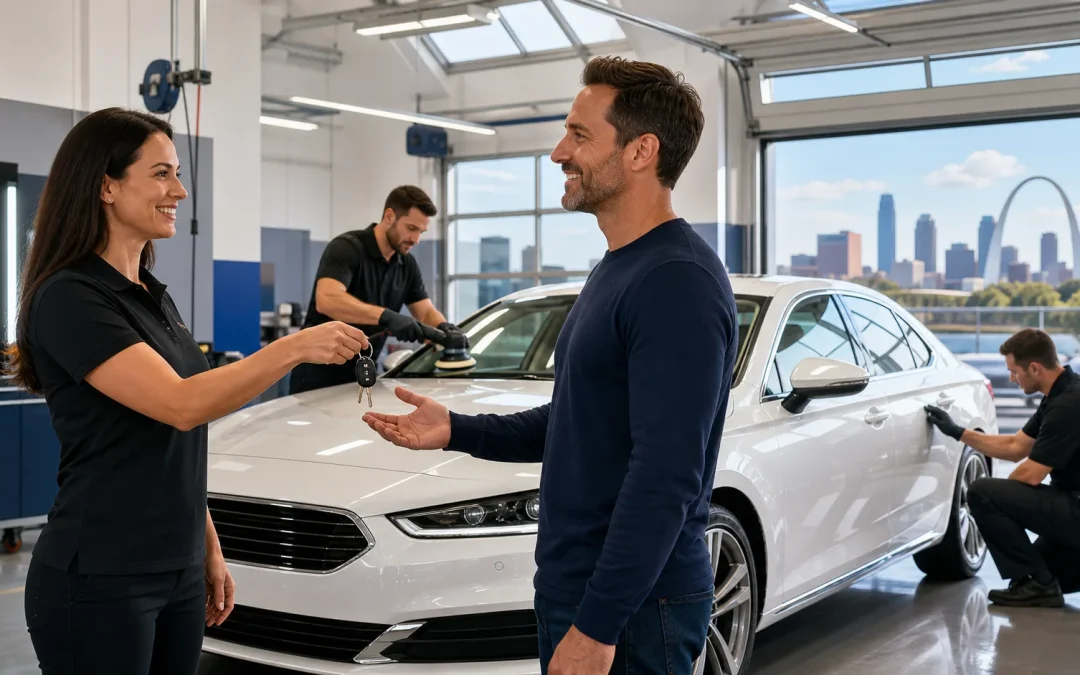
We will go over your paperwork with you, including repair details and any paint or workmanship warranties. If you notice a minor issue after you leave, such as a rattle, a light concern, or a small paint flaw, let us know so we can take care of it.
For the first few weeks with fresh paint, it is smart to:
- Skip harsh or automatic brush car washes
- Gently hand wash with mild soap and a soft mitt
- Wipe off bird droppings or tree sap as soon as you can
- Avoid parking under trees that drop heavy debris when possible
Ready for Repair? How to Start Your Central Auto Body Timeline
If you have recently been in a collision or got caught in a hailstorm, it helps to know there is a clear plan from drop-off to delivery. At Central Auto Body in Maplewood, we follow the same core stages for every vehicle: check-in and inspection, tear-down and hidden damage review, parts ordering and structural repair, refinishing and reassembly with ADAS calibration, and a final quality check before you drive away.
To make the process smoother, you can gather your insurance information, take photos of the damage, and make note of any warning lights or ADAS issues you have noticed. Share those details with your estimator at drop-off so they can build them into the repair plan. Our long-standing role in auto body repair in St. Louis is built on safety, communication, and solid craftsmanship from the first photo we take to the moment you turn the key and head back onto the road.
Get Started With Your Project Today
If your vehicle has been in a collision or needs cosmetic repairs, we are ready to help restore its safety and appearance. Learn more about our expert auto body repair in St. Louis and see how Central Auto Body can get you back on the road with confidence. To talk through your needs or schedule an appointment, simply contact us and our team will walk you through the next steps.
Recent Comments