
Stop Hidden Hail Damage From Draining Your Wallet
Hail can beat up a car in just a few minutes, then hide the proof. In St. Louis, late-spring and summer storms often roll through fast, and the damage is not always obvious. On light-colored paint, or in bright sun, small dents and stress marks can blend in so well that you barely notice them.
Many drivers do a quick walk-around, see a few dents and no broken glass, then assume simple paintless dent repair in St. Louis will fix everything. Sometimes that is true, but not always. Deeper body damage, glass stress, or water leaks can show up later and cost more to deal with.
At Central Auto Body, we want you to feel confident before you bring your car or fleet in. This guide walks through a simple, DIYer-friendly check of your roof, hood, trunk, glass, and interior so you can talk with any collision repair shop from a stronger position.
Prep Your Car and Lighting Before You Inspect
Before you start looking for hail damage, a little prep makes a big difference in what you can see. Small dents and tiny cracks can hide in dirt, glare, and shadows, so taking a few minutes to set up the right conditions will help you spot issues you might otherwise miss.
Set yourself up for a better check by doing a few simple things:
- Give the car a quick wash to remove dirt, pollen, and road film
- Park on a flat, open surface with room to walk all the way around
- Choose early morning, late afternoon, or shade instead of bright overhead sun
- Use a phone flashlight or small handheld light if you have one
- Turn off bright garage lights and use softer, angled lighting when indoors
When light hits the body panels at an angle, dents show up as wavy reflections or small, dark spots. Move your head and your light side to side, and watch how straight lines in the paint bend or ripple.
Keep safety in mind while you look:
- Do not climb on the car or stand on unstable stools or ladders
- Stay off wet or uneven surfaces that can make you slip
- Take clear photos from different angles so you have a record for insurance
- Try to check the car as soon as you can after the storm, before dirt and more rain hide the marks
You do not need special tools to spot many problems, just patience and the right light.
Spotting Roof, Hood, and Trunk Damage Before PDR
Hail usually hits the top-facing panels hardest, so the roof, hood, and trunk lid are the best places to start your inspection. Following a consistent order helps you avoid missing areas, especially when dents are small and spread out.
Work in this order:
- Roof first, since it often takes the worst hits
- Then hood and front fenders
- Then trunk lid and the tops of rear quarter panels
Stand back a few feet and look along the reflections on each panel. Hail dents often show up as small, round or oval depressions in random patterns (not straight lines like parking lot dings), along with “spider web” or wavy distortion in reflections of buildings, poles, or trees.
Then get closer and gently glide your hand across the surface. You are feeling for soft dips you can feel but barely see, slight ridges around dents, and any rough spots where paint might be chipped or cracked.
This step matters when you are thinking about paintless dent repair in St. Louis. PDR often works well when the paint is still intact with no cracks or chips, dents are shallow and smooth without sharp creases, and the metal has not been stretched or kinked.
You may need traditional collision repair instead of, or along with, PDR if you see missing paint, bare metal, or rust starting at the bottom of a dent, or if there are deep creases, sharp edges, or severe folds in the panel. Buckling near the edges, seams, or body lines can also point to more serious damage.
If you are not sure what you are seeing, photos and notes about the location of each area will help later when a technician checks the car in professional lighting.
Glass, Trim, and Mirror Clues Many Drivers Miss
Hail does not always shatter glass, but it can still weaken it. A quick glance at your windshield is not enough, so take a little extra time with all the glass and the parts surrounding it.
Look closely at:
- Windshield, especially near the edges and around the rearview mirror mount
- Front side windows and rear door glass
- Back glass, including the area around the defroster lines
You are checking for star-shaped marks or bull’s-eye-shaped circles, hairline cracks that start at the edge and creep inward, tiny pits you can feel when you run a fingertip or fingernail across the glass, and rough, sandblasted spots where hail has chipped the surface.
Then check the often-overlooked parts that hail likes to hit:
- Side mirrors and mirror housings
- Plastic or rubber trim around windows and doors
- Roof rails or rack mounts
- Headlights and taillights
- Emblems and plastic badges
Chips, cracks, or broken trim here can be a sign that the hail hit harder than it first looked. Strong impacts to glass and plastic can mean your metal panels took more force too, even if dents look small.
Glass damage matters for safety, not just looks. A weakened windshield can affect how well it supports the roof in a crash and how airbags work against it. Clear, well-lit photos of glass, trim, and mirror damage can also help when you discuss a comprehensive insurance claim that might include paintless dent repair in St. Louis along with other work.
Water-Leak and Interior Signs After Summer Storms
Hail can knock seals loose, crack hidden edges, or shift moldings just enough to let water in. The leaks might not show up right away, especially if the weather is dry for a few days after the storm, so it helps to re-check after the next heavy rain or humid spell.
After the next heavy rain or humid spell, check for:
- Moisture or staining along the edges of the headliner
- Wet spots or rings around the A-pillars by the windshield and C-pillars near the back glass
- Damp areas on the rear deck under the back glass
- Water under the trunk liner or in spare tire wells
- Damp carpet near the door sills and under floor mats
- Seatbelts that feel damp when pulled all the way out
You might also notice fogging or hazy patches inside the windows that linger longer than normal, a musty or earthy smell when you first open the doors, or little bits of mold starting in hidden corners or under mats.
Even if the outside dents seem mild, interior moisture is a warning sign. Leaks can lead to mold growth that is hard to remove, corrosion in wiring, sensors, and hidden connectors, and damage to sound insulation and padding that hurts comfort and resale value.
When you plan your repair strategy, make sure you mention any signs of water leaks, not just dents. In some cases, PDR alone is enough. In others, you may need additional collision repair work on seals, moldings, or glass to stop the problem for good.
When to Call Central Auto Body for a Professional Check
Once you have walked around the car and made notes, take a minute to think about your next step. It can help to compare what you found with a few practical factors:
- Your insurance deductible and whether a claim makes sense
- Your policy’s coverage for hail and other comprehensive damage
- The age, mileage, and overall value of your car or fleet vehicles
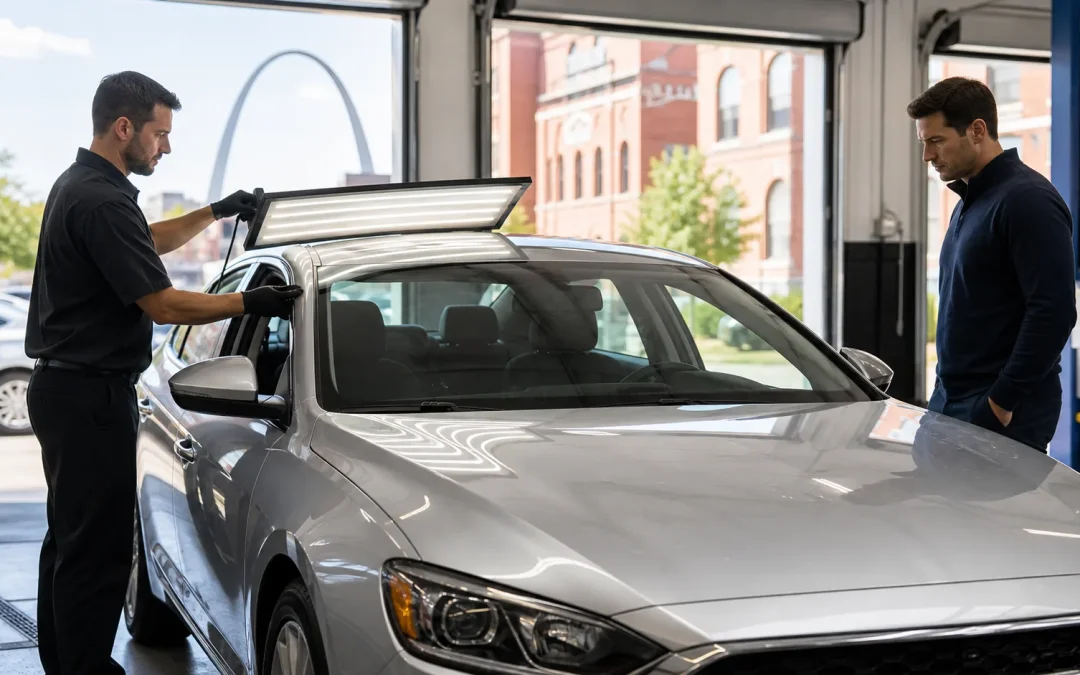
If your list includes many dents, glass marks, or any signs of leaks, a professional inspection is the safest move. At Central Auto Body in St. Louis, we provide hail assessments that go beyond a quick glance in the parking lot. A thorough check can include:
- Paint-safe lighting that shows small dents, waves, and paint stress
- Measuring tools to count and size dents on each panel
- Checks around seams, frame areas, and structure for hidden impact effects
- A clear explanation of whether paintless dent repair in St. Louis will give you a good result
- A plan if certain panels need traditional bodywork or paint instead of PDR alone
Hail does not have to turn into long-term problems or surprise costs. With a careful at-home check and a professional opinion when needed, you can protect your car’s look, safety, and value after our unpredictable St. Louis storms.
Restore Your Vehicle’s Value With Expert Dent Repair Today
If you are ready to remove dents without sacrificing your factory finish, schedule professional paintless dent repair in St. Louis with Central Auto Body. We will assess the damage, explain your options clearly, and recommend the most efficient repair plan for your vehicle. To book an appointment or ask a question, simply contact us and our team will follow up promptly.
Recent Comments