
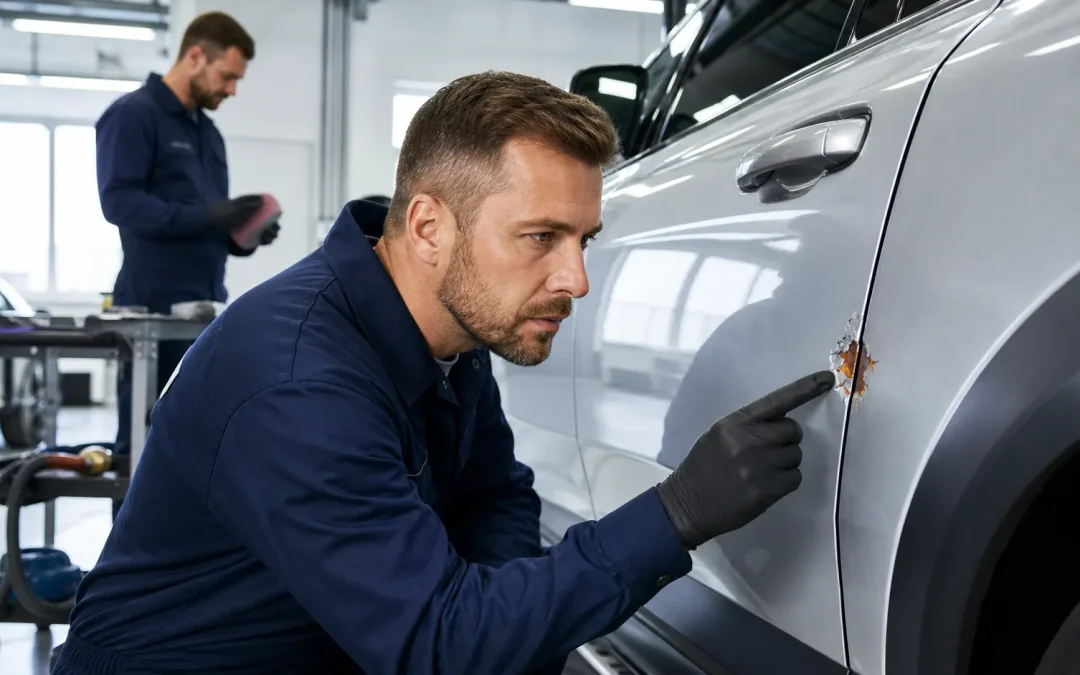
Door Dings, Rust, and Why "Minor" Damage Matters
A small door ding in a Maplewood parking lot can look like no big deal. Maybe the paint is only chipped in a tiny spot where another door tapped yours. It is easy to shrug it off, especially if you are in a hurry or the rest of the car looks fine. The problem starts when that chip cracks the clearcoat and paint just enough to expose bare metal.
Once metal is open to the air, corrosion starts. Around Maplewood, hot summers with humidity help that along. Moisture sits in that little nick, mixes with dirt and road grime, and rust begins under what still looks like a harmless chip or scuff. By the time you notice staining or bubbling, it has usually been working for a while.
Many drivers try a quick DIY touch-up pen to cover it. On flat, clean chips this sometimes holds up for a while. But near door edges and seam sealer lines, touch-up often fails. The rust keeps creeping, the paint starts to bubble, and what started as a tiny ding can turn into a bigger auto body repair in Maplewood, MO than you expected.
How Rust Spreads From a Simple Door Ding
Modern vehicle paint is a careful stack of layers. Under that shiny color, you have:
- Bare metal
- E-coat or corrosion coating
- Primer
- Basecoat color
- Clearcoat on top
When a door from the next parking space hits your car, the impact can crack through several of these layers. Even if you only see a small chip at the surface, the damage can reach deeper. Fine fractures can run under the clearcoat where you cannot see them.
Around door edges and rocker panels, there is often seam sealer. This material seals gaps where panels meet so water and salt cannot get between them. A ding right at, or close to, a seam can:
- Crack the seam sealer
- Open a path for water
- Trap moisture and salt between panels
Once that happens, rust does not just stay in the visible chip. It can creep under the paint along the seam, slowly lifting the coating and eating away at the metal underneath.
Warning signs that rust is moving past a surface nick include:
- Small bubbles or blisters in the paint near the chip
- Brown or orange staining that seems to “weep” from a seam or edge
- A rough or sharp paint edge that keeps getting larger
- New cracks forming around an old touch-up spot
When you see any of these changes, it usually means the problem is past a quick fix.
Why Simple Touch-Up Paint Often Fails on Rust Spots
DIY touch-up products are designed to hide small chips, not stop active rust. They sit on top of whatever is there. If rust is already forming, covering it does not make it go away. It can keep growing underneath that new paint.
Common problems with quick touch-up include:
- Painting over rust without removing it
- Skipping sanding, cleaning, and proper prep
- Dabbing paint on too thick, so it never cures right
- Leaving edges of clearcoat open, so moisture can sneak back in
On seams, there is another issue. Touch-up paint does not repair broken seam sealer. If the sealer has cracked, moisture can still get in from behind, no matter how nice the chip looks from the outside.
Local conditions around Maplewood can speed up these failures. Things that make a clearcoat breach or sloppy chip repair break down faster include:
- Road salt left over from winter, stuck in seams and edges
- Sudden heavy rain, storms, and standing water near doors and rocker panels
- Big temperature swings that make metal expand and contract
Even a careful DIY job rarely reaches the hidden gaps and backside surfaces that need attention. That is where a professional repair makes a real difference.
Professional Rust Repair Steps at a Collision Shop
When we repair a rusted door ding at a shop like Central Auto Body, we start with a close inspection. We look at the visible damage, then check the surrounding area for subtle signs of cracking and lifting paint. We may measure paint thickness to see how far we need to go to reach clean, solid material.
A typical repair process for this type of damage includes:
- Sanding or grinding out all rust until we reach clean metal
- Cleaning and treating the bare area with proper products
- Applying primer to seal the metal
- Matching your vehicle’s color and spraying the basecoat
- Re-applying clearcoat and blending into the surrounding area
Seam sealer needs special handling. If the ding has cracked or broken the sealer, we carefully remove the damaged section so we can see the metal underneath. That metal gets cleaned and treated, just like the outer surface. Then we:
- Reapply seam sealer in the correct pattern and thickness
- Make sure the sealer fully covers the seam
- Allow it to cure before priming and painting
Doing this in a controlled-shop setting matters. A collision shop gives you:
- A cleaner, dust controlled area for painting
- Proper drying and curing times
- Tools to blend paint into nearby panels for a factory-like look
- Better control over how each layer is applied
This helps the repair hold up over time instead of peeling or fading.
When to Choose Spot Repair vs. Panel Work or Replacement
Not every rusted ding needs a big repair. For shallow dings with light rust staining and no spreading bubbles, a professional spot repair can be a smart choice. We remove the early rust, protect the metal, and refinish a small area before things get worse.
Spot repair is usually reasonable when:
- Rust is limited to a small chip or scratch
- Bubbling is minor and close to the impact point
- The seam sealer still looks solid and intact
- The rust has not reached an edge, body line, or rocker panel
More extensive work may be needed when:
- Rust has crept into the door seam or between panels
- You can see holes, soft spots, or flaking metal
- Large sections of paint are bubbling or peeling
- Rust streaks run along body lines or down to the rocker panels
For many people and businesses, insurance can come into the picture. Shops like ours work directly with major insurance companies. That helps with documenting the rust, showing what came from a specific impact, and explaining repair options for daily drivers and fleet vehicles. For work trucks and service vehicles, we can also suggest repair approaches that reduce downtime while still stopping the rust from spreading.
Protect Your Door From Rust Before It Gets Expensive
Quick action after a door ding gives you the best chance to avoid bigger problems. A simple plan can make a real difference:
- Keep the area as clean and dry as you can
- Avoid letting salt and dirty water sit on the damage
- Take clear photos of the chip and any changes over time
- Arrange a prompt inspection with a trusted local body shop
In late July and through the rest of summer around Maplewood, heat and moisture are hard on damaged paint. Bugs, pollen, and storm debris tend to stick to panels and hold moisture in place. It helps to:
- Wash your vehicle regularly, focusing on door edges and lower panels
- Look closely for new chips after storms or light hail
- Pay attention to small brown specks or stains that were not there before
When you catch a problem early, a simple repair can often stop the rust before it moves into seams or panel edges. At Central Auto Body in Maplewood, MO, we see how fast a “tiny” door ding can turn into a larger auto body repair in Maplewood, MO if it is ignored. Taking it seriously from the start is usually the easiest and most effective way to protect your vehicle’s doors and keep rust from spreading.
Restore Your Vehicle’s Safety and Appearance With Expert Care
If your car has been damaged in a collision, now is the time to schedule professional auto body repair in Maplewood, MO with Central Auto Body. We will inspect the damage, explain your options clearly, and coordinate repairs that fit your schedule and budget. Reach out today through our contact page so we can get your vehicle looking great and safely back on the road.
Recent Comments