
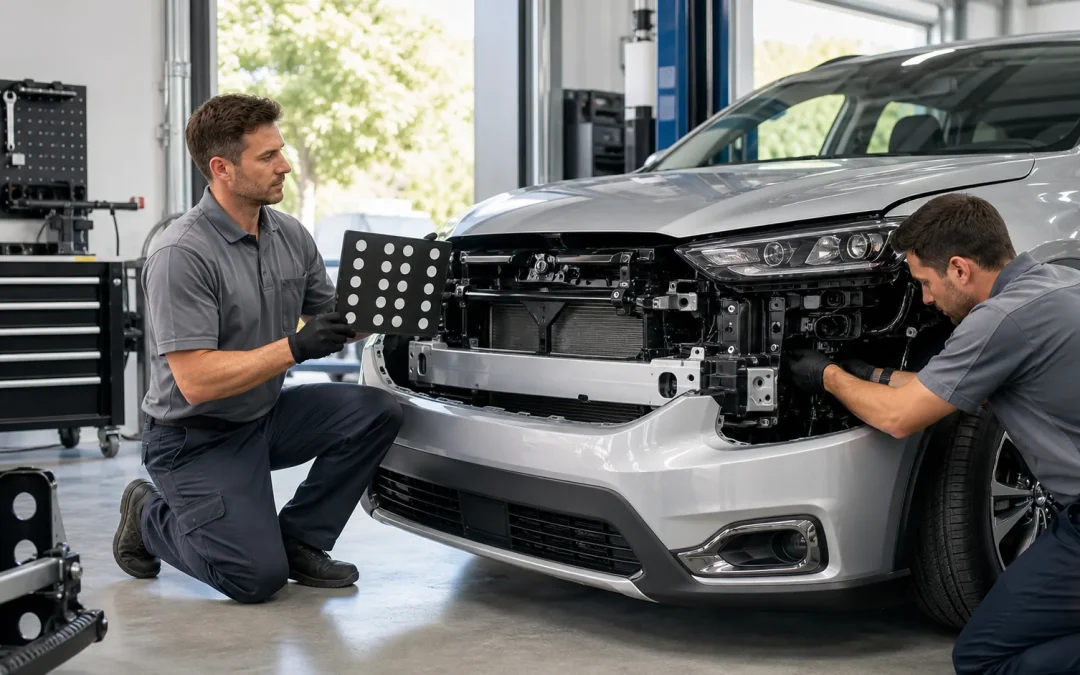
Hidden Crash Damage That Can Cost You Later
A small bump in traffic in Webster Groves can look like no big deal. Maybe the bumper has a scuff, the grille has a crack, and everything still feels fine on the drive home. Then a week or two later, a warning light pops up, the car starts pulling a little, or the temperature gauge creeps higher in traffic.
Modern cars and trucks are packed with sensors, computers, and systems that talk to each other. Even a low-speed collision can knock things out of place. Damage often hides behind plastic covers and under sheet metal, so problems might not show up right away.
Our team sees this a lot with drivers from Webster Groves and nearby neighborhoods. Catching hidden damage early helps prevent bigger repairs, surprise breakdowns, and safety issues on busy streets and highways. With fall rain and heavier school traffic, it is a good time to understand what a quality collision shop actually checks after a “minor” crash.
What Shops Check First After a Minor Crash
When a car comes in after a small hit, the first step is a careful visual inspection. Even if the damage looks light, we treat it like it could be more.
We start on the outside and work our way in, checking things like:
- Bumper covers and fenders for cracks, waves, or paint stress
- Headlights, taillights, and grille for damage or loose mounts
- Gaps around the hood, trunk, and doors to see if panels shifted
- Paint lines and body lines to spot twisting or bending underneath
If something does not line up right, that often points to hidden structural damage. From there, we look at the structure that supports the body:
- Frame rails and crumple zones
- Radiator support and core support
- Inner fender structures and mounting brackets
On many cars, we measure key points on a frame machine to see if the body moved, even by a small amount. A slight shift can change how the car drives and how it protects you in another crash.
We also focus on safety items right away:
- Seat belts and their retractors
- Airbag covers and dash panels
- Steering wheel and column
- Any airbag or restraint warning lights on the dash
What looks like “just a scratch” on the bumper can be the tip of the iceberg. This is why a careful, step-by-step inspection matters, even when the collision felt minor at the time.
ADAS Sensors and When They Must Be Calibrated
Newer vehicles often come with Advanced Driver Assistance Systems, also called ADAS. These features help warn you about danger and support your driving, but they rely on sensors that must be aimed correctly.
Common ADAS parts include:
- Front and rear radar units
- Backup and 360-degree cameras
- Blind spot and cross-traffic sensors
- Parking sensors in the bumpers
- Lane-keep and lane-departure cameras, often near the windshield
Many of these are hidden behind bumper covers, grilles, and emblems. Even a light tap in a parking lot can move a sensor a little. If that happens, you might get false beeps, warnings at the wrong time, or no help at all when you really need it.
Repairs that often require sensor calibration include:
- Bumper replacement or repair
- Radiator support or core support work
- Suspension or steering repairs
- Airbag deployment repairs
- Windshield work or camera bracket adjustment
A thorough collision repair should include electronic scans both before and after repairs. When needed, static or dynamic calibrations bring systems back to the settings the manufacturer intended. That helps make sure features like automatic braking, lane alerts, and blind spot warnings work the way they should for your drives around Webster Groves and the greater St. Louis area.
Alignment, Suspension, and Tire Wear Red Flags
Even a small crash can put a lot of force into the suspension and steering. Parts can bend without looking damaged, and subframes can shift a small amount. The car might still seem to track straight at first, but small changes here can turn into big problems later.
Drivers often notice issues like:
- Pulling to one side or a drifting feeling
- A steering wheel that is off-center while driving straight
- Vibration at highway speeds
- Uneven or rapid tire wear
- Clunks or pops when turning or going over bumps
In the shop, we look deeper than just the way the car feels on the road. Collision technicians will check:
- Four-wheel alignment readings
- Tie rods, control arms, and ball joints
- Struts, shocks, and mounting points
- Wheel bearings and steering racks
- Wheel and tire runout and damage
When roads are wet and covered with leaves, good alignment and solid suspension parts are even more important. Proper contact between your tires and the pavement helps with braking, cornering, and emergency maneuvers in traffic around schools, shopping areas, and busy intersections.
Cooling System, AC, and Under-the-Hood Damage
Front-end bumps are especially hard on parts behind the grille. Even if there is no coolant on the ground and the car seems to run fine, there can still be damage waiting to show itself.
We pay close attention to:
- Radiators and AC condensers for bent fins or cracked plastic tanks
- Cooling fans, shrouds, and wiring
- Radiator support alignment and brackets
- Coolant hoses that may be pinched, rubbed, or pushed against sharp edges
- Hood latches and striker alignment, which can signal that the front structure moved
Some symptoms are easy to miss, especially as weather starts to cool:
- Temperature gauge creeping up in stop-and-go traffic
- AC not blowing as cold as before, especially at low speeds
- New humming, rubbing, or fan noises from the front of the car
Catching these cooling and AC issues early can keep a small front-end crash from turning into an overheating problem on a highway trip or a broken-down car on the shoulder. For drivers and fleets around Webster Groves, that peace of mind matters during daily commutes and weekend drives.
When a "Minor" Crash Becomes a Major Safety Issue
A low-speed collision might not look serious, but it can still affect sensors, alignment, suspension parts, and the cooling system. When those areas are off, safety and reliability both drop. Problems may not show up until weeks later, when tires start wearing funny, warning lights stay on, or the car stops feeling as stable as it used to.
This is why a careful inspection by a professional shop is so important after any kind of hit, even one that happened in a parking lot at low-speed. A proper post-accident check with body, structure, electronics, and under-hood areas in mind helps keep you and your passengers safer on the road.
At Central Auto Body in Maplewood, we work with drivers and fleets from Webster Groves and across the St. Louis area to track down this kind of hidden damage. We repair frames, body panels, paint, hail and dents, and we also help with insurance claims so the process feels less stressful. A thorough inspection and clear written estimate can show you exactly what your vehicle needs to get back to safe, reliable driving in the seasons ahead.
Restore Your Vehicle’s Safety and Appearance With Expert Care
If your car has been damaged, we are ready to provide precise, reliable auto body repair in Webster Groves, MO that protects your investment and gets you back on the road with confidence. At Central Auto Body, we carefully assess every vehicle and walk you through clear repair options before any work begins. Reach out to contact us today so we can schedule an appointment and get your repair started.
Recent Comments